
七、模块
时间:2019-11-17 18:14:38
收藏:0
阅读:96
目录
1. 序列化模块
1.1 json和pickle的区别
序列化之后的数据类型
json: str
pickle: bytes
适用范围
json:所有的编程语言
pickle:仅限于Python适用
可序列化的数据类型
json: int float bool str list tuple dict None
pickle: 所有数据类型
load方法适用的不同
json:不能连续load,只能一次性拿出所有的数据
pickle:可以连续load,多套数据放在同一个文件中
1.2 json模块
json.dumps()和json.loads()
import json

test = [1, 4.5, True, '模块', ['b', 'c'], (2, 3), {'name': 'aaron'}, None]

# 序列化
result = json.dumps(test)
res = json.dumps(test, ensure_ascii=False)
print(result, type(result))
print(res, type(res))

# 反序列化
recovery = json.loads(result)
print(recovery, type(recovery))

# 输出结果
[1, 4.5, true, "\u6a21\u5757", ["b", "c"], [2, 3], {"name": "aaron"}, null] <class 'str'>
[1, 4.5, true, "模块", ["b", "c"], [2, 3], {"name": "aaron"}, null] <class 'str'>
[1, 4.5, True, '模块', ['b', 'c'], [2, 3], {'name': 'aaron'}, None] <class 'list'>

'''
注意:
  1.序列化的结果中所有的字符串类型的数据都使用双引号""
  2.序列化之后汉字是使用unicode格式输出的,若想输出直接是汉字,秩序在序列化时多加一个ensure_ascii参数即可。
'''
json.dump()和json.load()
import json

test = [1, 4.5, True, '模块', ['b', 'c'], (2, 3), {'name': 'aaron'}, None]

# 将序列化后的数据写入文件中
with open('json.txt', mode='w', encoding='utf-8') as fp:
    json.dump(test, fp, ensure_ascii=False)

# 将文件中的数据反序列化
with open('json.txt', mode='r', encoding='utf-8') as fp:
    result = json.load(fp)
    print(result, type(result))

# 输出结果
[1, 4.5, True, '模块', ['b', 'c'], [2, 3], {'name': 'aaron'}, None] <class 'list'>
1.3 pickle模块
pickle.dumps()和pickle.loads()
import pickle

test = [1, 4.5, True, '模块', ['b', 'c'], (2, 3), {'name': 'aaron'}, None]

# 序列化
result = pickle.dumps(test)
print(result, type(result))

# 反序列化
recovery = pickle.loads(result)
print(recovery, type(recovery))

# 输出结果
b'\x80\x03]q\x00(K\x01G@\x12\x00\x00\x00\x00\x00\x00\x88X\x06\x00\x00\x00\xe6\xa8\xa1\xe5\x9d\x97q\x01]q\x02(X\x01\x00\x00\x00bq\x03X\x01\x00\x00\x00cq\x04eK\x02K\x03\x86q\x05}q\x06X\x04\x00\x00\x00nameq\x07X\x05\x00\x00\x00aaronq\x08sNe.' <class 'bytes'>
[1, 4.5, True, '模块', ['b', 'c'], (2, 3), {'name': 'aaron'}, None] <class 'list'>
pickle.dump()和pickle.load()
import pickle

test = [1, 4.5, True, '模块', ['b', 'c'], (2, 3), {'name': 'aaron'}, None]

# 将序列化后的数据写入文件中
with open('pickle.txt', mode='wb') as fp:
    pickle.dump(test, fp)
    pickle.dump(test, fp)
    pickle.dump(test, fp)

# 将文件中的数据反序列化
with open('pickle.txt', mode='rb') as fp:
    result = pickle.load(fp)
    print(result, type(result))
    result = pickle.load(fp)
    print(result, type(result))
    result = pickle.load(fp)
    print(result, type(result))

# 输出结果
[1, 4.5, True, '模块', ['b', 'c'], (2, 3), {'name': 'aaron'}, None] <class 'list'>
[1, 4.5, True, '模块', ['b', 'c'], (2, 3), {'name': 'aaron'}, None] <class 'list'>
[1, 4.5, True, '模块', ['b', 'c'], (2, 3), {'name': 'aaron'}, None] <class 'list'>

# 注意:打开文件时要以二进制格式打开。
2. 时间模块
2.1 time模块
# time.time(): 获取当前的本地时间戳(从1970年1月1日零点到现在的秒数)
# time.localtime():通过时间戳获取时间元组(默认当前时间)
# time.ctime(): 通过时间戳获取时间字符串(默认当前时间)
# time.strftime(格式化字符串, [时间元组]):通过时间元组格式化时间字符串(时间元组时可选参数)
# time.strptime(时间字符串, 格式化字符串):通过时间字符串提取出时间元组
# time.sleep():程序睡眠等待
# time.perf_counter():用于计算程序运行的时间


import time

result = time.time()
print(1, result, type(result))

result = time.localtime()
print(2, result, type(result))

result = time.ctime()
print(3, result, type(result))

result = time.strftime('%Y-%m-%d %H:%M:%S', time.localtime())
print(4, result, type(result))

# 注意:两个参数的书写内容必须完全相同
result = time.strptime('2019年11月15日21时41分51秒', '%Y年%m月%d日%H时%M分%S秒')
print(5, result, type(result))

start = time.perf_counter()
time.sleep(5)
end = time.perf_counter()
result = end - start
print(6, result, type(result))

# 输出结结果
1 1573827926.2985218 <class 'float'>
2 time.struct_time(tm_year=2019, tm_mon=11, tm_mday=15, tm_hour=22, tm_min=25, tm_sec=26, tm_wday=4, tm_yday=319, tm_isdst=0) <class 'time.struct_time'>
3 Fri Nov 15 22:25:26 2019 <class 'str'>
4 2019-11-15 22:25:26 <class 'str'>
5 time.struct_time(tm_year=2019, tm_mon=11, tm_mday=15, tm_hour=21, tm_min=41, tm_sec=51, tm_wday=4, tm_yday=319, tm_isdst=-1) <class 'time.struct_time'>
6 5.0000196 <class 'float'>
2.2 datetime模块
# datetime.datetime.now():获取现在本地的时间
# datetime.datetime.utcnow():获取当前的UTC时间
# datetime.datetime.strftime():将datetime.datetime格式的时间转化为指定格式的str
# datetime.datetime.strptime():将str格式的时间转化为datetime.datetime格式的时间
# datetime.timedelta():用作datetime.datetime格式时间的加减运算的参数
# datetime.timezone(datetime.timedelta(hours=n)):获取指定的时区


import datetime

result1 = datetime.datetime.now()
print(1, result1, type(result1))

result2 = datetime.datetime.strftime(result1, '%Y-%m-%d %H:%M:%S')
print(2, result2, type(result2))

result3 = datetime.datetime.strptime(result2, '%Y-%m-%d %H:%M:%S')
print(3, result3, type(result3))

result4 = datetime.datetime.utcnow()
print(4, result4, type(result4))

result5 = datetime.timedelta(days=30, hours=2, minutes=5, seconds=30)
print(5, result5, type(result5))

# 获取与当前UTC时间加上30天2小时5分钟30秒之后的时间
result6 = result4 + result5
print(6, result6, type(result6))

result7 = datetime.timezone(datetime.timedelta(hours=2, minutes=5, seconds=30))
print(7, result7, type(result7))

# 输出结果
1 2019-11-16 11:39:37.096657 <class 'datetime.datetime'>
2 2019-11-16 11:39:37 <class 'str'>
3 2019-11-16 11:39:37 <class 'datetime.datetime'>
4 2019-11-16 03:39:37.120650 <class 'datetime.datetime'>
5 30 days, 2:05:30 <class 'datetime.timedelta'>
6 2019-12-16 05:45:07.120650 <class 'datetime.datetime'>
7 UTC+02:05:30 <class 'datetime.timezone'>
3. random模块
random.random()
# 随机获取0~1之间的小数(0 <= x < 1)

import random

result = random.random()
print(result)
random.randrange()
# 随机获取指定范围内的整数

import random

result1 = random.randrange(7)
result2 = random.randrange(1, 7)
result3 = random.randrange(1, 7, 2)
random.randint()
- 注意:其指定范围是闭区间
# 随机获取指定范围的整数

import random

result = random.randint(1, 6)
print(result)
random.uniform()
# 获取指定范围内的随机小数

import random

result = random.uniform(1, 5)
print(result)

# 注意:return a + (b-a) * self.random()
random.choice()
# 随机获取指定序列中的任一元素 import random test_list = [1, 3, 5, 7, 9] result = random.choice(test_list) print(result)- 随机生成验证码
import random

def create_verify_code(n):
    '''
    随机生成一个由字母和数字组成的n位验证码
    :param n:指定生成二维码的长度
    :return:返回生成的验证码
    '''

    verify_code = ''
    for item in range(n):
        # 将ASCII编码转换成对应的字符
        up
        per_cha = chr(random.randrange(65, 91))
        lower_cha = chr(random.randrange(97, 123))
        number = str(random.randrange(0, 10))
        choice_list = [upper_cha, lower_cha, number]
        verify_code += random.choice(choice_list)

    return verify_code


result1 = create_verify_code(5)
result2 = create_verify_code(10)
print(result1)
print(result2)

# 输出结果
V9V7y
1rxX2v0sG2
random.sample()
# 随机获取指定序列中的指定个数的元素

import random

test_list = [1, 3, 5, 7, 9]
result = random.sample(test_list, 2)

print(result, type(result))

# 注意:结果存放在一个列表中
random.shuffle()
# 随机打乱列表中的值

import random

test_list = [1, 3, 5, 7, 9]
random.shuffle(test_list)

print(test_list)

# 注意:该方法是对原列表本身进行操作,无返回值。
4. shutil模块
# shutil.copy():复制文件的权限和内容
# shutil.move():修改文件名
# shutil.rmtree():删除指定目录下的所有内容
# shutil.make_archive():压缩文件
# shutil.unpack_archive():解压文件

import shutil

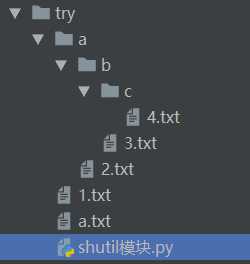
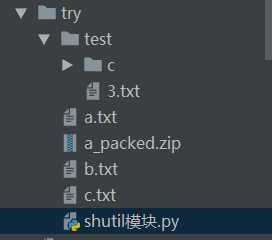
shutil.copy('a.txt', 'b.txt')
shutil.move('1.txt', 'c.txt')
path1 = r'C:\Python38\Scripts\exercise\advance\try\a\b'
path2 = r'C:\Python38\Scripts\exercise\advance\try\test'
shutil.make_archive('a_packed', 'zip', path1)
shutil.unpack_archive('b_packed.zip', extract_dir=path2)
shutil.rmtree('a')
运行shutil模块.py之前
运行shutil模块.py之后
5. os模块
执行系统命令
# os.system():执行系统命令,将结果直接输出
# os.popen():执行系统命令,可以将结果转换成utf-8的格式输出

import os

command = 'date'
os.system(command)

result = os.popen(command).read()
print(result, type(result))

# 输出结果
???????: 2019/11/16 ????
??????????: (??????)


当前日期: 2019/11/16 周六
输入新日期: (年月日)
 <class 'str'>
目录操作
# os.lsitdir():获取指定目录下的所有文件和文件夹
# os.getcwd():获取当前文件工作所在目录的绝对路径
# os.chdir():将当前文件工作的目录改变为指定的路径下的目录

import os

result = os.listdir(r'C:\Python38\Scripts\exercise')
print(result, type(result))

result = os.getcwd()
print(result, type(result))

os.chdir(r'C:\Python38\Scripts\exercise')

result = os.getcwd()
print(result, type(result))

# 输出结果
C:\Python38\Scripts\exercise\advance
C:\Python38\Scripts\exercise\advance
 <class 'str'>
['.idea', 'advance'] <class 'list'>
C:\Python38\Scripts\exercise\advance <class 'str'>
C:\Python38\Scripts\exercise <class 'str'>
文件和文件夹操作
# os.remove():删除文件
# os.mkdir():创建文件夹
# os.rmdir():删除文件夹(只能删除空文件夹)
# os.rename():重命名文件(夹)
os.environ
# os.environ:获取或修改环境变量

import os

# 获取环境变量
result1 = os.environ['PATH']
result2 = result1.split(';')
print(result2[-3:])

# 增加环境变量
os.environ['PATH'] += r'C:\softwares\QQ\DAUM\PotPlayer;'
result3 = os.environ['PATH']
result4 = result3.split(';')
print(result4[-3:])

os.system('PotPlayerMini.exe')

# 输出结果
['C:\\Python27\\Scripts\\', 'C:\\Python27\\', '']
['C:\\Python27\\', 'C:\\softwares\\QQ\\DAUM\\PotPlayer', '']

# 注意:PotPlayerMini.exe是路径C:\softwares\QQ\DAUM\PotPlayer下的一个可执行文件;添加的环境变量是临时的,只在改文件执行时有效。
模块属性
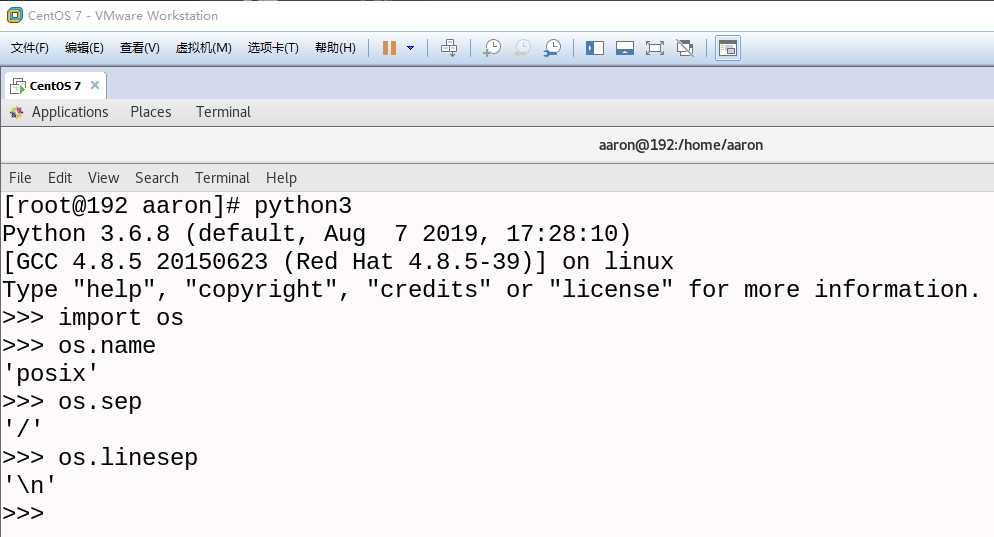
# os.name:获取系统标识(Windows:nt  Linux&Mac:posix)
# os.sep:获取路径分隔符(Windows:\  Linux&Mac:/)
# os.linesep:获取系统的换行符(Windows:\r\n或\n  Linux&Mac:\n)

import os

result = os.name
print(result)

result = os.sep
print(result)

result = os.linesep
print(repr(result))

# 输出结果
nt
'\r\n'
Linux下运行结果
路径操作
- os.path模块
# os.path.abspath():将路径转化为绝对路径
# os.path.basenaem():返回文件名部分
# os.path.dirname():返回路劲部分
# os.path.split():将路径拆分成文件名部分和路劲部分,存放在一个元组中
# os.path.splitext():将路径拆分成后缀和剩余部分,存放在一个元组中
# os.path.join():将多个路径拼接成一个路径(根据系统自动选择拼接的连接符)
# os.path.getsize():获取文件大小
# os.path.isdir():判断路径是否是文件夹
# os.path.isfile():判断路径是否是文件
# os.path.exits():判断指定路径是否存在

import os

result1 = os.path.abspath('a.txt')
print(result1)

result2 = os.path.basename(result1)
print(result2)

result3 = os.path.dirname(result1)
print(result3)

result4 = os.path.split(result1)
print(result4)

result5 = os.path.splitext(result1)
print(result5)

path1 = r'C:\dir\cherry'
path2 = r'cd\apple.txt'
result6 = os.path.join(path1, path2)
print(result6)

result7 = os.path.getsize('a.txt')
print(result7)

result8 = os.path.isdir(result3)
result9 = os.path.isdir(result1)
print(result8, result9)

result10 = os.path.isfile(result1)
result11 = os.path.isfile(result3)
print(result10, result11)

result12 = os.path.exists(result1)
result13 = os.path.exists(result6)
print(result12, result13)

# 输出结果
C:\Python38\Scripts\exercise\advance\a.txt
a.txt
C:\Python38\Scripts\exercise\advance
('C:\\Python38\\Scripts\\exercise\\advance', 'a.txt')
('C:\\Python38\\Scripts\\exercise\\advance\\a', '.txt')
C:\dir\cherry\cd\apple.txt
44
True False
True False
True False
求指定文件夹的大小
- os.walk方法
import os def calc_file_size(path): ''' 求指定文件夹的大小 :param path:文件夹的路径 :return:文件夹大小 ''' file_size = 0 for dirpath, dirnames, filenames in os.walk(path): for i in filenames: item = os.path.join(dirpath, i) print(item) file_size += os.path.getsize(item) return file_size file_path = os.path.abspath('get_size') result = calc_file_size(file_path) print(result) # 输出结果 C:\Python38\Scripts\exercise\advance\get_size\file1.txt C:\Python38\Scripts\exercise\advance\get_size\dir1\file2.log C:\Python38\Scripts\exercise\advance\get_size\dir1\file3.log C:\Python38\Scripts\exercise\advance\get_size\dir1\dir2\file4.txt 842- 递归法
import os

def calc_file_size(path):
    '''
    求指定文件夹的大小
    :param path:文件夹的路径
    :return:文件夹大小
    '''

    file_size = 0

    for i in os.listdir(path):
        item = os.path.join(path, i)
        if os.path.isdir(item):
            file_size += calc_file_size(item)
        elif os.path.isfile(item):
            print(item)
            file_size += os.path.getsize(item)

    return file_size


file_path = os.path.abspath('get_size')
result = calc_file_size(file_path)
print(result)

# 输出结果
C:\Python38\Scripts\exercise\advance\get_size\dir1\dir2\file4.txt
C:\Python38\Scripts\exercise\advance\get_size\dir1\file2.log
C:\Python38\Scripts\exercise\advance\get_size\dir1\file3.log
C:\Python38\Scripts\exercise\advance\get_size\file1.txt
842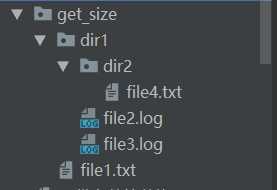
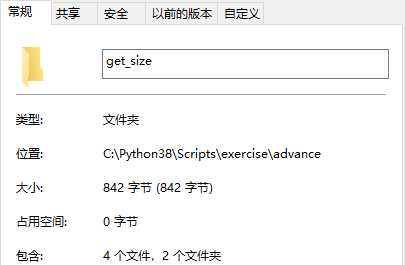
注意
两种方法在计算文件夹大小时,方法一是从最外层的文件开始计算的;方法二是从最内层的文件开始计算的。
6. sys模块
sys.path
# sys.path:查看可以直接进行导入模块的路径

import sys

result = sys.path
print(result)

# 输出结果
['C:\\Python38\\Scripts\\exercise\\advance', 'C:\\Python38\\python38.zip', 'C:\\Python38\\DLLs', 'C:\\Python38\\lib', 'C:\\Python38', 'C:\\Python38\\lib\\site-packages']
sys.argv
# sys.argv:获取用户执行脚本时,传入的参数 import sys result = sys.argv print(result) # 输出结果 ['C:\\Python38\\Scripts\\exercise\\advance\\14sys模块.py', '参数一', '参数二', '参数三']注意:执行脚本时需在命令行窗口进行。

7. logging模块
格式一(推荐使用)
import logging

# 创建一个logger对象,同时配置其名字和写入日志内容的等级
logger = logging.Logger('Aaron', level=logging.WARNING)
# 创建一个文件操作符,包含文件名称,文件的打开格式以及文件的编码方式
file_handler = logging.FileHandler('test.log', mode='a', encoding='utf-8')
# 创建一个屏幕操作符(输出内容直接在原来print输出的地方)
stream_handler = logging.StreamHandler()
# 创建一个格式
fmt = logging.Formatter('%(asctime)s - %(name)s - %(levelname)s - %(module)s :%(message)s')
# 给文件操作符设置格式
file_handler.setFormatter(fmt)
# 给屏幕操作符设置格式
stream_handler.setFormatter(fmt)
# 给logger对象绑定文件操作
logger.addHandler(file_handler)
# 给logger对象绑定屏幕操作
logger.addHandler(stream_handler)

# 生成日志的内容,等级大于等于之前设置好的日志等级的内容才会写入到日志中
logger.debug('This is debug')
logger.info('This is info')
logger.warning('This is warning')
logger.error('This is error')
logger.fatal('This is fatal')

# 在日志文件test.log中写入的内容和在操作台显示的内容均为:
2019-11-08 10:07:56,692 - Aaron - WARNING - demo25 :This is warning
2019-11-08 10:07:56,692 - Aaron - ERROR - demo25 :This is error
2019-11-08 10:07:56,692 - Aaron - CRITICAL - demo25 :This is fatal

# 注意:写入日志的等级分为五个等级(DEBUG、INFO、WARN=WARNING、ERROR、FATAL=CRITICAL)
格式二
import logging

file_handler = logging.FileHandler('demo.log', mode='a', encoding='utf-8')
logging.basicConfig(
    format='%(asctime)s-%(name)s-%(levelname)s-%(module)s:%(message)s',
    datefmt='%Y-%m-%d %H:%M:%S',
    handlers=[file_handler],
    level=logging.ERROR,
)

logging.error('aaron')

# 输出日志文件中的内容
2019-11-08 21:08:37-root-ERROR-demo16:aaron

# 注意:此格式不能让日志内容同时从控制台输出到屏幕上
切分大日志文件
import time
import logging
from logging import handlers

logger = logging.Logger('Alex', level=logging.ERROR)
# 创建一个文件操作符,包含文件名称,文件切分的时间单位和间隔以及文件的编码方式
# 切分的时间单位when可以选择:S(秒)、M(分)、H(时)、D(天)
file_handler = handlers.TimedRotatingFileHandler('split.log',when='S', interval=5, encoding='utf-8')
fmt = logging.Formatter('%(asctime)s-%(name)s-%(levelname)s-%(module)s:%(message)s')
file_handler.setFormatter(fmt)
logger.addHandler(file_handler)

for i in range(1, 100):
    time.sleep(1)
    logger.error(str(i))
原文:https://www.cnblogs.com/aaron-zhou/p/11876995.html
评论(0)